Christian Spirituality for Human Flourishing
Brief History
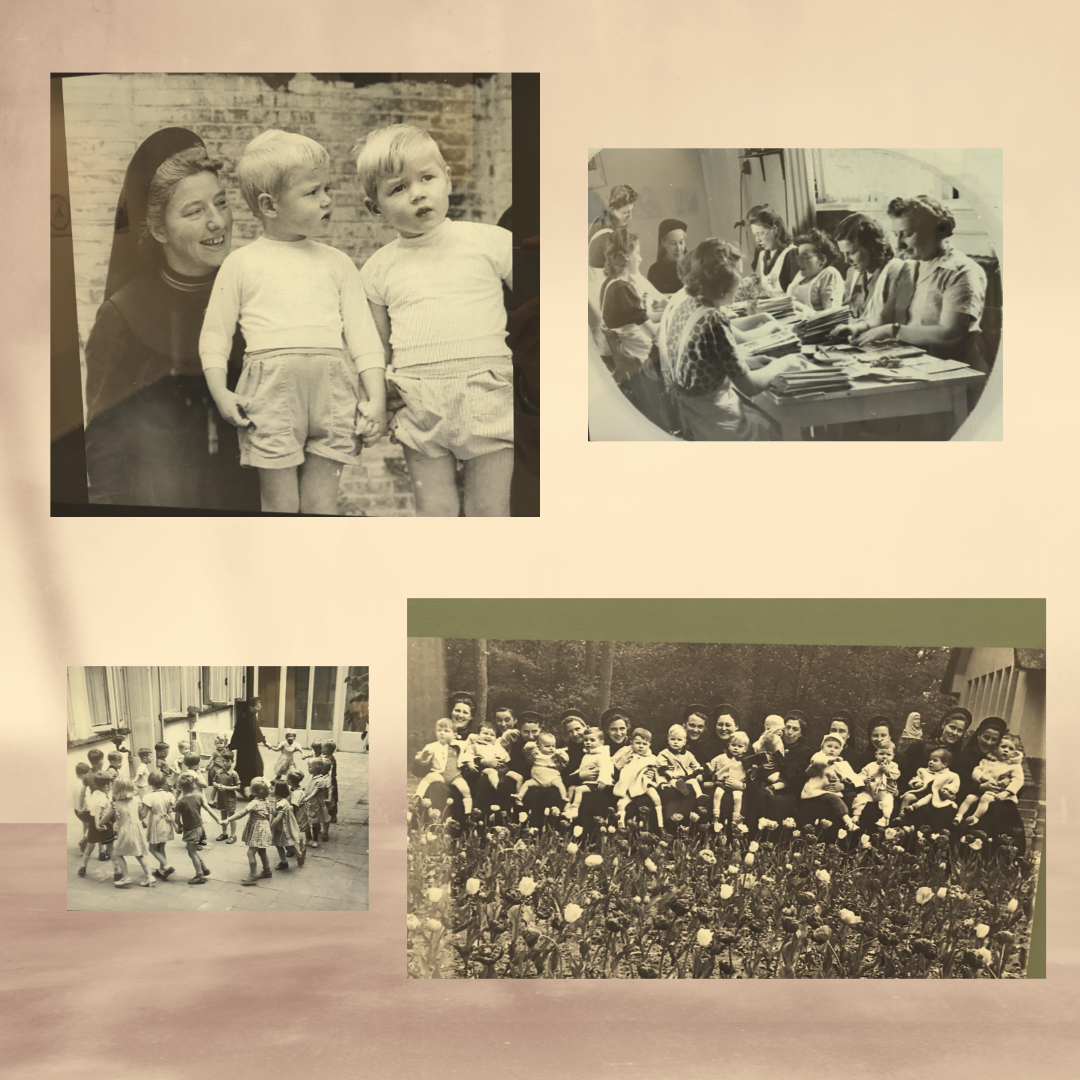
In 1934, when the tension toward World War II increased, Father van Nuenen built a cloister in one of the poorest areas in Utrecht in the Netherlands. The land had already been devastated by the First World War and worsened after the Second War. There were too many women and their children on the streets who did not have fathers. They did not have places to live, enough food, and clothes. Children could not attend school, and mothers could not find jobs to earn enough income. He and the first 10 sisters came to live there, visited poor people, and offered meals and a place to stay without setting limitations on how long they could stay. They built a school and kindergarten in the cloister territory and taught those children. Besides, they gave job training to mothers so that they could get jobs. In later years, they even built a vacation/retreat house and organised dance parties for those ladies. The number of sisters was 150 by then, and in 50 years ceremony of the congregation in 1984, 12,000 people from the whole country gathered to celebrate. Their activities are recognised by the government and they received the title of honourable citizen.
They are the true activists.
A sister told me one day, 'Social work here began from the cloister. We do not ask if they believe in God, but we ask what they need.'
"Enter into yourself in this holy hour. God is working in you. Don't look for it far away, but look for it very concretely in the little things of every day. God makes it possible for your heart, for which all the world is never too big and the smallest place is never too small, because He wants to be the revelation of His love in each one of us, of the love He started in us, which He makes grow in us, and brings to completion. He wanted to give us the full freedom of the free children of God, ‘not as slaves under the law’ but in love, not in limited human capabilities, but in the love of God, which wants to work in each of us."
--------
Let us enter into ourselves and open our hearts to the profound wisdom that arises from gratitude. Whether you see this as the work of a divine presence, the beauty of interconnectedness, or simply the unfolding of love within, consider this: the smallest acts of kindness and the tiniest moments of grace carry profound meaning.
Let us pause to recognize that within each of us lies a vast capacity to give and receive love—a capacity that is not confined by the boundaries of belief, culture, or tradition. It is a universal invitation to grow in compassion, to act with intention, and to nurture the seeds of goodness that connect us all.
Reflect on how this love, this sense of gratitude, is not something distant or abstract but something concrete and present in the details of everyday life. It is in this space, where gratitude transforms into action, that we find our truest selves—not bound by limitations, but free to live and love fully, as beings guided by a shared humanity and a compassionate heart.